
BEFORE · DURING · AFTER THE DIP
DONE RIGHT
What we do to your steel, and how you can check. Good galvanising comes down to preparation, process control and care at every stage.
WHAT HAPPENS TO YOUR STEEL
GOOD WORK STARTS BEFORE THE DIP
Galvanising isn't magic. It's chemistry, time and attention.
We work with fabricators and engineers to understand the steel, the design and the job it needs to do. A conversation before fabrication can prevent avoidable problems once the steel arrives in Napier.
From the mill certificate to the finished coating, here's what happens to your work — and why it matters.

OUR PROCESS
BEFORE. DURING. AFTER.
01 — BEFORE THE DIP
READ THE STEEL FIRST
Mill certificate. Silicon and phosphorus influence how the steel reacts with zinc. Share the certificate early so we can plan the dip.
Venting and draining. Hollow sections need correctly placed openings so air can escape and zinc can flow in and out safely.
Preparation. Threads, machined areas, cleaning and fabrication details all matter before steel reaches the kettle.
02 — IN THE KETTLE
CONTROL THE PROCESS
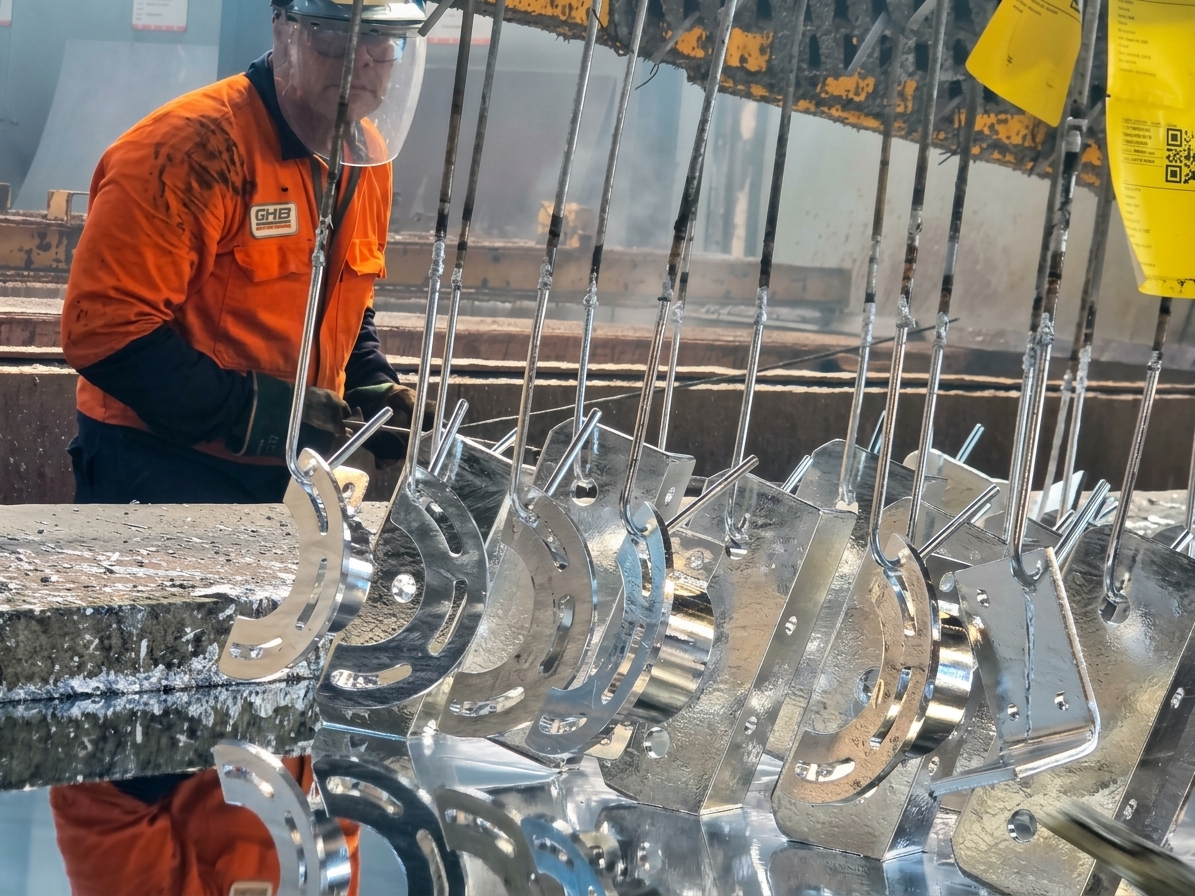
445 °C molten zinc. Steel is immersed in the galvanising bath to form a protective coating.
Right for the job. Immersion time is considered alongside section thickness and the chemistry of the steel.
Careful withdrawal. Controlled handling helps molten zinc drain as steel leaves the kettle.
03 — AFTER THE DIP
CHECK. FINISH. REPORT.
Inspected and fettled. Our team checks the work and removes unwanted drips, spikes and excess zinc where appropriate.
Coating information. Thickness measurements and formal reporting can be arranged for engineering requirements.
Job information. Photographs and status information are available through the GHB Customer App where provided for the job.
WHY WE ASK FOR THE MILL CERTIFICATE
THE COATING GROWS OUT OF YOUR STEEL
Hot dip galvanising creates a coating through a reaction between zinc and iron, not simply a layer of paint on top.
The steel's silicon and phosphorus content can affect how the coating develops. That's why we'd rather know the chemistry before the job reaches the kettle.
If you're planning a job, send us the mill certificate with your drawings. We can discuss likely galvanising considerations before you cut or fabricate.
Need help reading a mill certificate? Ask about Cert Check — one of the tools demonstrated in the GHB Toolbox and available through the GHB Customer App.

AFTER THE DIP
LOOKED AT. FINISHED. READY.
The job isn't finished when it comes out of the zinc. Our team looks at the coating, fettles where needed and prepares the steel for its next stage of production.
We pay attention to drips, sharp points, handling and the details that matter to fabricators fitting the steel together afterwards.
Need a third-party inspection or a coating-thickness report before dispatch? Let us know when you book the job.
WHAT WE WORK TO
THE STANDARDS YOUR ENGINEER NEEDS
AS/NZS 4680:2025
Specifications and testing for hot dip galvanised coatings on fabricated iron and steel articles, including coating thickness and appearance.
AS/NZS 2312.2:2014
Guidance on designing and specifying hot dip galvanising for corrosion protection and service-life considerations.
INDUSTRY CONNECTIONS
We stay involved in galvanising and steel-construction industry conversations through organisations including GANZ, GAA and SCNZ.
CHECKED WITH CARE
MEASURED, NOT JUST LOOKED AT
Visual checks are one part of inspection. Coating-thickness measurements and documented results help demonstrate what was delivered.
Where your specification calls for a formal report, tell the team at the start so we can agree on the inspection and reporting requirements.

OUR PEOPLE AND PROCESSES
GALVANISING IS A TRADE. WE TREAT IT LIKE ONE.
The GHB team develops its skills through structured in-house training covering the galvanising process, plant operations and safe handling.
Good results depend on people noticing a problem early, understanding why it matters and talking to the customer before it becomes expensive.
PAINTING OVER GALVANISING
PLANNING A DUPLEX SYSTEM?
A protective paint system over galvanising can provide a strong combination, but surface preparation needs to suit both the zinc coating and the paint manufacturer's specification.
Talk to GHB and your coating applicator before a specification is finalised. We can discuss preparation and the information needed for your project records.
ASK OUR TEAMWHEN SOMETHING ISN'T RIGHT
WE HEAR THE COMPLIMENTS. WE NEED TO HEAR THE REST.
People tell us when a job went well. They don't always tell us when it didn't. If something comes back wrong, bent, missed or late, please tell us.
We want to put it right, record what happened and use what we learn to reduce the chance of it happening again. That only works if we hear about it.
TELL US WHAT WENT WRONGBUILT TO LAST. READY FOR ANOTHER LIFE.
Galvanised steel is durable, and steel and zinc can be recycled. If sustainability matters in your specification, we're happy to talk through your requirements.